Asphalt & Paving
Line Striping & Pavement Marking in Chicagoland
Stalls, accessible spaces, fire lanes, arrows, stencils, and curb painting — laid out to be read at a glance and to stand up to a plow season.
Striping is the cheapest work you can do to a parking lot and the most visible. It is also the part with actual rules attached to it. Accessible stalls have required dimensions, a required access aisle, required signage, and required markings; fire lanes have to be marked and legible for the fire department to enforce them; and directional flow in a tight lot is the difference between orderly circulation and two cars meeting nose-to-nose at a corner. Faded lines are not just untidy — they are the reason a lot fails an inspection or loses a claim.
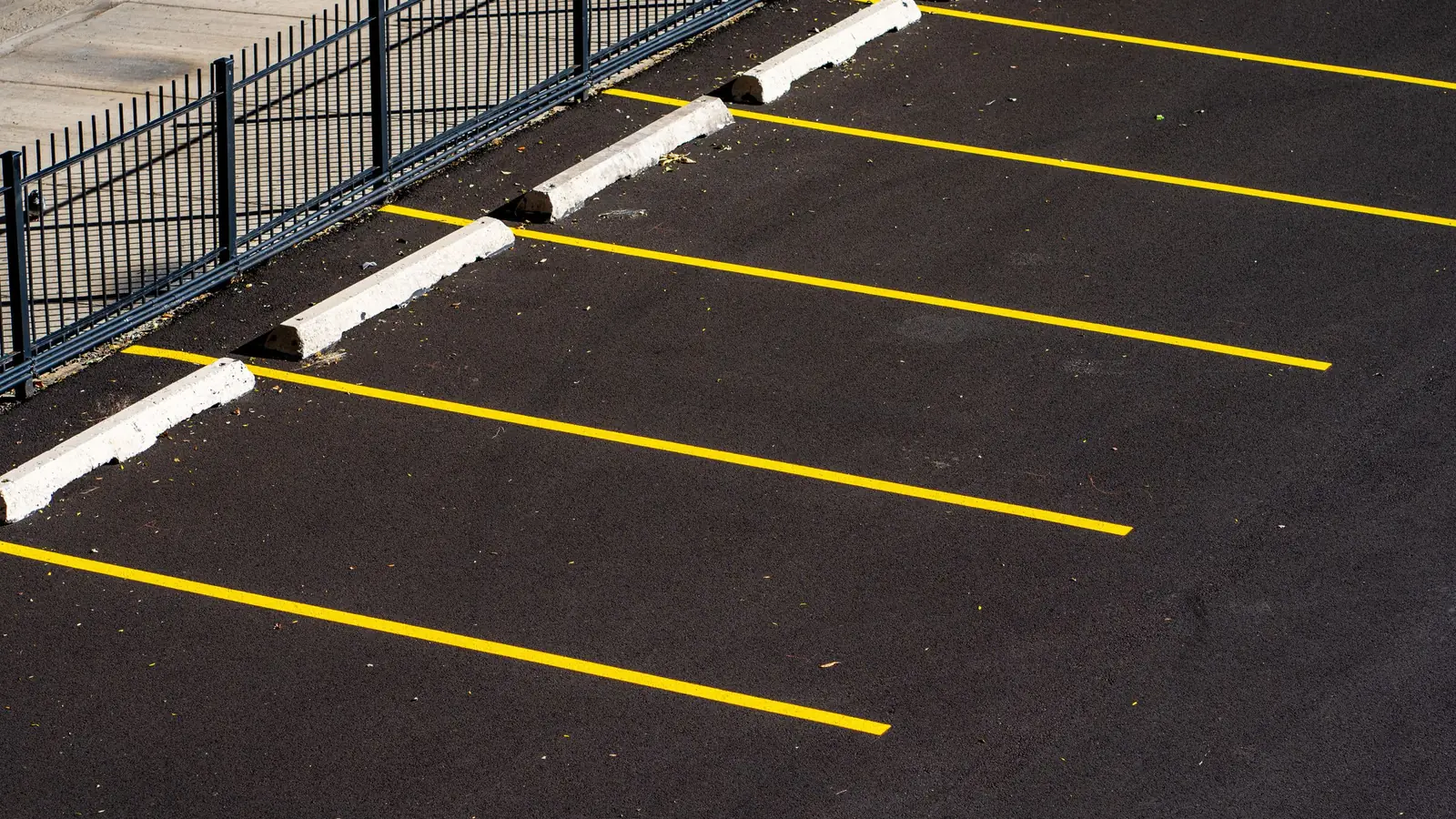
We stripe parking lots across the greater Chicagoland area, from a handful of stalls behind a storefront to full commercial and industrial sites. That covers straightforward restripes over an existing layout, complete redesigns that fit more stalls or better traffic flow into the same footprint, and fresh layouts on newly paved surfaces. Accessible stalls and access aisles, fire lanes and no-parking zones, directional arrows, crosswalks, stop bars, loading zones, EV and reserved-space stencils, numbering, and curb painting are all part of the same visit.
Markings we lay down
- Standard stall stripingSingle or double lines, 90-degree or angled, laid out to a consistent module across the lot.
- Accessible stalls and access aislesAccessible spaces with correctly dimensioned access aisles, hatching, and the symbol of access.
- Fire lanes and no-parking zonesMarked and lettered fire lanes, curb painting, and keep-clear zones at doors and hydrants.
- Directional arrows and traffic controlArrows, stop bars, yield markings, and one-way flow through tight or busy lots.
- Crosswalks and pedestrian routesMarked crossings from the parking area to the entrance, including hatched pedestrian paths.
- Stencils and reserved spacesNumbering, visitor and reserved spaces, EV charging, loading zones, compact-only, and custom text.
- Curb and bollard paintingPainted curbs, wheel stops, and bollards for visibility and for zone enforcement.
- Layout redesignRe-planning the lot to fit the stalls, circulation, and accessible provision you actually need.
How it works
How a striping job runs
- 01
Measure and plan the layout
For a restripe we record the existing layout before anything is covered. For a redesign we measure the lot and lay out stalls, aisles, accessible spaces, and flow on paper first.
- 02
Clean the surface
Sweeping, blowing, and removing dirt, sand, and loose sealer. Paint applied over grit lifts with the grit in the first freeze.
- 03
Set out and snap lines
Measured, chalked, and checked square before a drop of paint goes down. Crooked stalls are almost always a layout problem, not a painting one.
- 04
Apply the markings
Striping machine for lines, stencils for symbols and text, hand work at curbs and edges — laid at a consistent width and film thickness.
- 05
Cure and reopen
Cones and barricades stay until the paint has set, then the lot is handed back with everything readable and dry.
Why it matters
Why it is worth doing right
Accessible provision that holds up
Correct stall and aisle dimensions, proper symbols, and legible markings — the details an inspection or a complaint turns on.
More usable stalls
A re-planned layout frequently fits more cars into the same footprint than an old one drawn by eye.
Fire lanes that get enforced
Unreadable fire-lane markings cannot be enforced against the car blocking your service door.
An instant visual lift
Nothing else you can do to a lot for the money makes the whole property look as cared-for as fresh white lines.
Line Striping & Pavement Marking
Questions we get asked
Most Chicagoland lots want restriping every year or two. Snow plows scrape paint off directly, and road salt and winter grit finish the job — lots that get plowed hard fade considerably faster than the paint's nominal life would suggest.
Yes, and if the existing layout is sound that is the quickest and cheapest option — we lay fresh paint straight over the old lines. If the layout is being changed, the old markings need blacking out or removing first so drivers are not reading two sets of lines at once.
We lay out and mark accessible stalls, access aisles, hatching, and the symbol of access as part of a normal striping job. The number of accessible spaces a site must provide, and the signage that goes with them, is set by regulation and by your municipality — tell us the lot size and we will work to what applies.
Paint needs dry pavement and temperatures above a minimum to cure properly, so striping is a spring-through-fall job in this climate. A damp or cold application will not bond and will come off with the first plow.
Free Estimates
Get a free line striping & pavement marking estimate
Call or text (213) 779-2889 and describe the job. We will come out, look at it properly, and give you a number — free, with nothing attached to it.
Other Services
What else we can take on while we are there
These are the jobs that most often come up alongside this one.
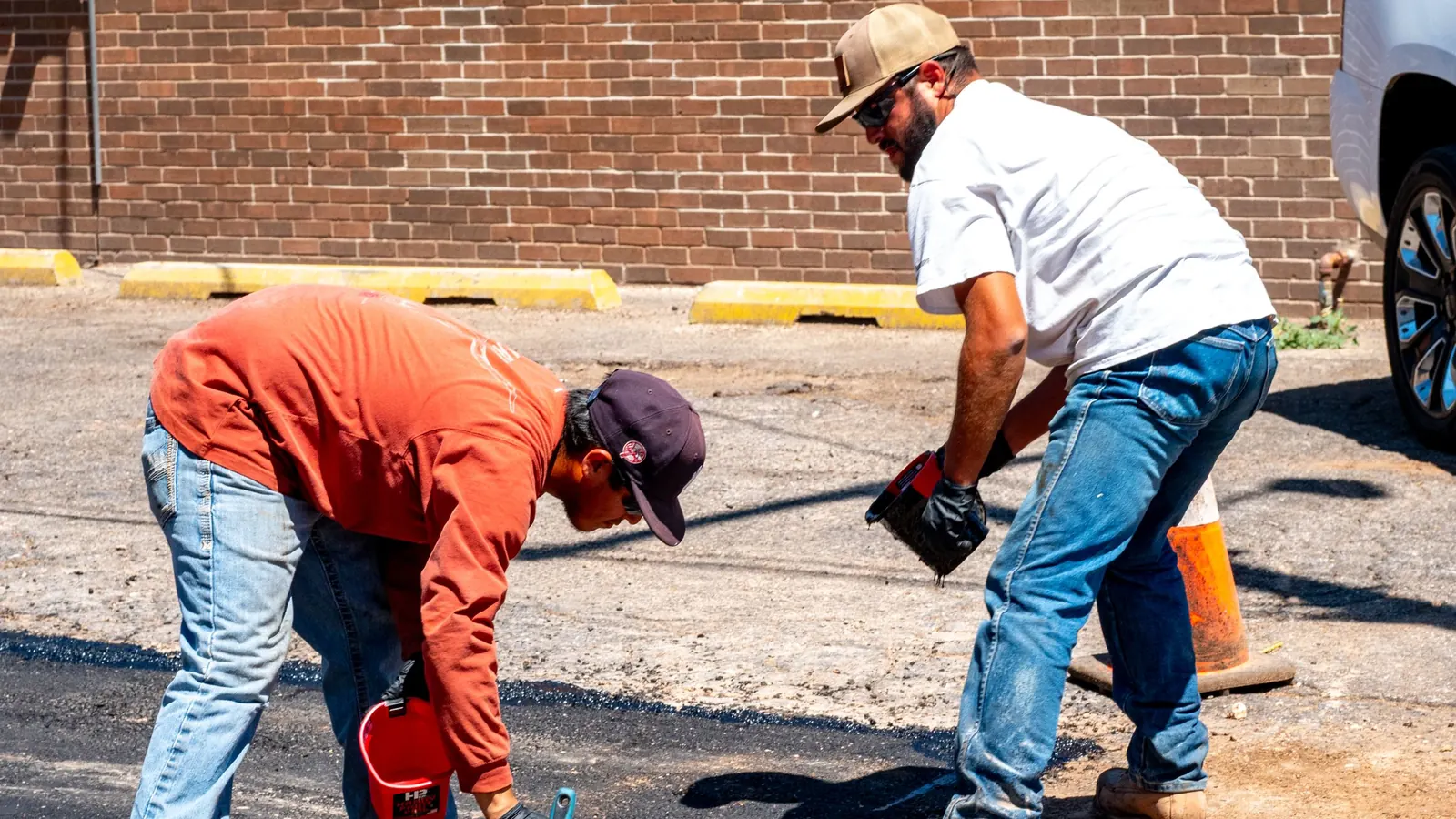
Parking Lot Revamps
Repaving, crack fill, pothole repair, sealcoating, and restriping — the whole lot, one crew.
View details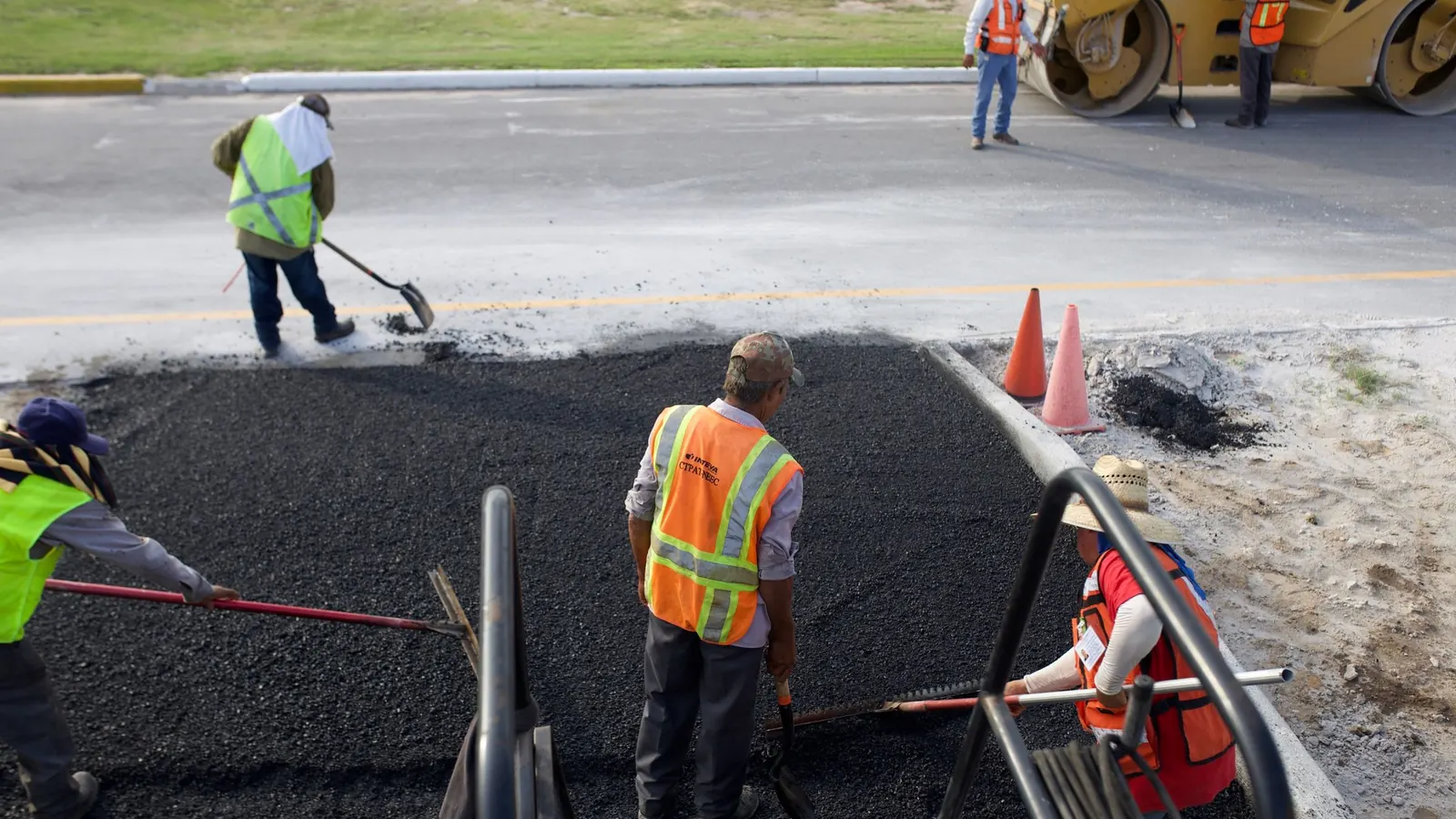
Asphalt Paving
New asphalt, resurfacing, and repair for driveways, lots, and private roadways.
View details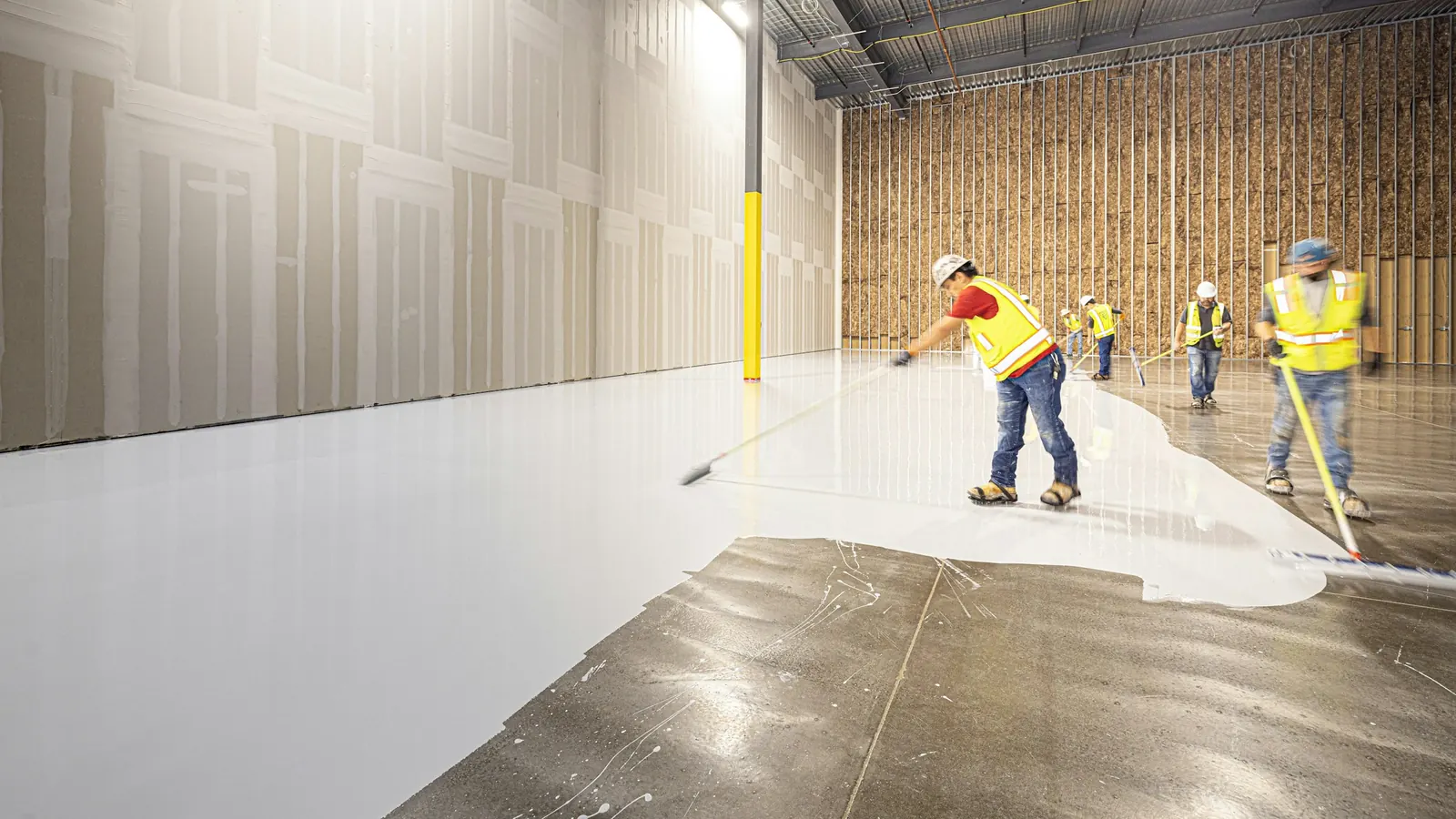
Epoxy Floor Coatings
Seamless epoxy and resinous coatings for garages, basements, warehouses, and showrooms.
View details